

What Are Hosts in Cybersecurity? Meaning, Types, and Security Guide
In cybersecurity, a host is any device connected to a network that can send, receive, or process data. Common examples include desktops, laptops, servers, smartphones, thin clients, multifunction devices, and cloud-based workloads.
Hosts are important because they are often the direct target of cyberattacks. If one host is compromised, attackers may use it to steal data, abuse credentials, move laterally across the network, or escalate privileges to reach more valuable systems.
That is why host security is a core part of cybersecurity. Instead of only protecting the network edge, organizations also need to secure each connected device individually.
What Is a Host in Cybersecurity?
A host in cybersecurity is a computer or connected device that communicates with other devices on a network. Sources describe hosts as systems that send or receive data, services, and applications, and they are typically identified within TCP/IP networks through unique IP addresses.
In simple words, if a device can join a network and exchange data, it can be treated as a host. This includes both physical systems and virtual systems running in cloud or virtualized environments.
Why Hosts Matter in Cybersecurity

Hosts matter because every connected system can become an entry point for attackers. A single infected laptop, weakly configured server, or compromised mobile device can expose credentials, leak data, or open the door to broader network compromise.
This is why host cybersecurity is often described as a foundational layer of modern security strategy. Strong host protection helps reduce attack surfaces and limits the damage if one system is targeted.
Types of Hosts
Different types of hosts appear in enterprise, personal, and cloud environments. Understanding them helps explain why host security must cover more than just office computers.

Servers
Servers are hosts that provide services, data, applications, or websites to other systems on a network. Because they often store important business data and run critical applications, they are high-value targets for attackers.
Workstations and desktops
Workstations and desktops are common endpoint hosts used by employees and home users. These devices often handle email, documents, browsing, and business software, which makes them frequent targets for malware, phishing, and unauthorized access attempts.
Laptops and mobile devices
Laptops, smartphones, and tablets are also hosts when they connect to networks and exchange data. These devices create extra security challenges because they are portable, often used outside secure office environments, and may connect through public or home networks.
Cloud and virtual hosts

Modern environments also include cloud hosts and virtual hosts. Sources describe cloud hosts as workloads running in cloud infrastructure and virtual hosts as systems that support multiple domains, applications, or virtualized services on shared infrastructure.
What Is Host Security?
Host security refers to the measures used to protect individual devices or systems from cyber threats. It includes defending the operating system, applications, data, and access controls on each host against malware, unauthorized access, misconfiguration, and exploitation.
Host-based security is closely related and, according to NIST, refers to a framework of capabilities on hosts that can detect, respond to, and report vulnerabilities and incidents through trusted agents and centralized management.
Common Threats to Hosts
Hosts face many types of cyber threats because they are where users log in, run applications, and store data. These systems are often the first place where attackers try to gain control.

Malware
Malware is one of the most common host threats. Sources specifically mention antivirus and anti-malware tools as important host protections because individual systems can be targeted by malicious software that steals data, damages files, or creates persistence for attackers.
Unauthorized access
Hosts are vulnerable to unauthorized access when weak passwords, poor account controls, or missing multi-factor authentication allow attackers or insiders to log in improperly. Strong passwords, unique usernames, and MFA are repeatedly cited as important host protections.
Credential abuse

Credential abuse happens when attackers use stolen or misused login details to access a device or account. Since hosts are where credentials are entered and stored in practice, they are a major focus for this kind of attack.
Configuration weaknesses
Configuration weaknesses include insecure settings, unnecessary services, missing hardening, and poor default controls. These weaknesses increase the attack surface and make hosts easier to exploit.
Unpatched vulnerabilities
Hosts become easier to attack when operating systems, hardware, and applications are not updated regularly. Multiple sources emphasize patching as a key part of secure host management because updates fix known security flaws before attackers can exploit them.
Key Components of Host Security
Strong host security uses layers of protection directly on the device. These controls work together to reduce risk and improve detection and response.
Characteristics of a Secure Host
A secure host has strong technical controls and good maintenance practices. Sources commonly identify firewalls, strong passwords, regular patches, and monitoring as core characteristics of a secure host.
It should also follow least privilege principles, consistent configuration baselines, and layered defense. These practices reduce unnecessary exposure and make it harder for attackers to gain or expand access.
Best Practices for Host Security
Host security is strongest when it is proactive, layered, and consistently managed. The goal is not just to stop attacks, but also to reduce the chance of compromise and detect problems early.
Keep systems patched
Regularly update operating systems, applications, and device firmware to close known vulnerabilities. Patching is one of the most repeated recommendations for secure hosts because outdated software is a common attack path.
Use endpoint protection
Install endpoint protection such as antivirus, anti-malware, and related host defense tools. These controls help detect, block, and remove malicious activity on the device.
Enforce strong access control
Use strong passwords, unique usernames, and multi-factor authentication to reduce unauthorized access risk. Access should also follow least privilege so users only have the permissions they need.
Configure host firewalls
A host-based firewall helps control traffic to and from a device. This adds a local protection layer even when broader network defenses are already in place.
Monitor activity and logs
Monitor host activity and review logs for suspicious behavior. Continuous monitoring helps identify attacks earlier and supports faster incident response.
Apply secure configuration baselines
Use secure configuration standards to reduce unnecessary services, open ports, and weak settings. A consistent baseline helps minimize attack surface across all hosts.
Host Security vs Network Security
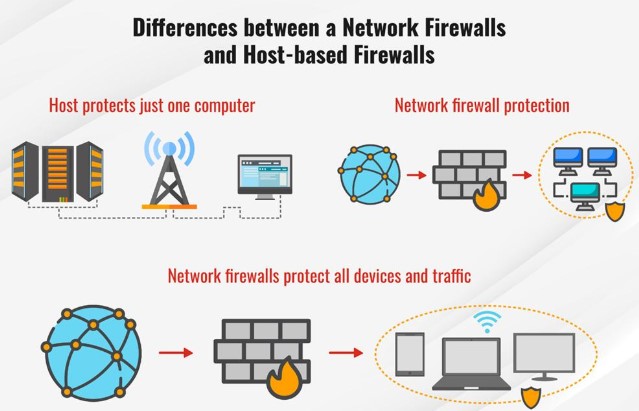
Host security and network security are closely related, but they focus on different layers. Host security protects the individual device itself, while network security focuses more on traffic, perimeter controls, segmentation, and communications between systems.
Both are necessary because network protection alone cannot fully protect a device once an attacker gets inside. Host-based controls are critical for stopping, detecting, and containing attacks at the endpoint level.
Real-World Example
Imagine a company laptop connected to the corporate network. That laptop is a host because it sends and receives data, runs applications, and stores information.
If the laptop lacks patches, has weak passwords, and no anti-malware protection, it becomes an easy target for attackers. If it is secured with updates, endpoint protection, strong access controls, and monitoring, the organization greatly reduces the chance that one compromised device will lead to a larger breach.
Conclusion
Hosts in cybersecurity are the individual devices and systems connected to a network that can process, send, or receive data. These include servers, desktops, laptops, smartphones, and cloud workloads, and each one can become a target for attack.
Host security is the practice of protecting those systems through controls such as patching, firewalls, anti-malware tools, access restrictions, encryption, and monitoring. Because every host can be a potential doorway into a larger environment, strong host protection is essential to modern cybersecurity.
FAQs
What is a host in cybersecurity?
A host in cybersecurity is any network-connected device that can send, receive, or process data. Examples include computers, servers, smartphones, and cloud workloads.
What is host security?
Host security refers to the protection of individual devices such as laptops, desktops, servers, and mobile devices from threats like malware, unauthorized access, and data theft.
Are endpoints and hosts the same?
They are closely related, and many hosts are also endpoints, especially user devices like laptops and desktops. In practice, host security often overlaps with endpoint security because both focus on protecting individual connected systems.
Why are hosts important in cybersecurity?
Hosts are important because they are common attack targets and can become entry points into a wider network. A compromised host can lead to credential theft, lateral movement, and larger security incidents.
What are examples of hosts?
Examples of hosts include servers, workstations, desktops, laptops, smartphones, tablets, thin clients, multifunction devices, and cloud workloads.
How do you secure a host?
You secure a host by applying patches, using antivirus or anti-malware tools, enabling host firewalls, enforcing strong access controls, encrypting data, and monitoring activity for suspicious behavior.
What is host-based security?
Host-based security is a framework of security capabilities implemented directly on hosts to detect, respond to, and report vulnerabilities and incidents. NIST describes it as involving trusted agents and centralized management functions.
What is the difference between host security and network security?
Host security protects the individual device, while network security protects communications and broader network infrastructure. Both are necessary for a complete cybersecurity strategy.