
Apple Hedges Bets on Chips: Intel & Samsung Talks Reshape the Future of Silicon (2026 Deep Dive)
The semiconductor industry is buzzing with reports that Apple is in serious negotiations with Intel and Samsung to diversify its custom chip production. Captured in headlines like “Apple Hedges Bets on Chips in Talks with Intel, Samsung,” this development signals a major strategic shift for the iPhone maker. As of May 2026, Apple faces mounting pressures from global chip shortages, escalating geopolitical tensions in Taiwan, and TSMC’s packed production schedules. With over 90% of its M-series and A-series chips fabbed by TSMC, Apple can’t afford to put all its eggs in one basket. These talks aim to secure alternative suppliers for next-gen 2nm and sub-2nm nodes, powering everything from iPhone 17 to M5 Macs.
The Backstory: Apple’s Silicon Journey and Why Diversification Is Urgent
Apple’s pivot to custom silicon began humbly with the A4 chip in the 2010 iPhone 4, but it exploded with the M1 in 2020. These ARM-based beasts deliver 2-3x better performance per watt than Intel’s x86, fueling Apple’s $400B+ market cap. Today, M4 powers MacBooks with neural engines for Apple Intelligence AI, while A18 drives iPhone 16’s camera wizardry.
Yet, success breeds dependency. TSMC fabs nearly all of it in Taiwan, exposing Apple to:
Critical Vulnerabilities
- Global Chip Crisis Echoes: The 2021-2025 shortage cost Apple $10B+ in lost sales.
- Geopolitical Flashpoints: U.S.-China trade wars and Taiwan Strait military drills threaten 60% of global foundry capacity.
- Exploding Demand: AI boom books TSMC through 2028; Apple’s 250M annual devices need more.
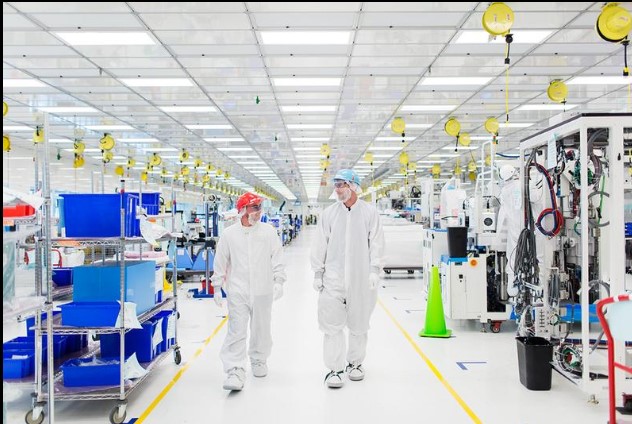
Bloomberg and The Information (May 2026) report Apple is testing Intel’s 18A process in Ohio and Samsung’s SF2 in Korea. This “hedge bets” strategy mirrors Nvidia’s multi-foundry approach, ensuring resilience.
Intel’s Foundry Ambitions: From Rival to Apple’s Potential Savior
Intel, Apple’s former Mac chip supplier until 2020, is reinventing itself. CEO Pat Gelsinger’s IDM 2.0 blueprint turns Intel into a foundry giant, leveraging $20B+ in CHIPS Act subsidies for U.S. plants.
Why Intel Fits Apple’s Needs Perfectly
Intel’s 18A (1.8nm equivalent) enters production H1 2025, promising RibbonFET transistors for superior density. Early tests show 15-20% better power efficiency—music to Apple’s ears for all-day MacBook batteries.
- U.S.-Centric Security: Arizona and Ohio fabs dodge Taiwan risks, aligning with Biden-era onshoring.
- Historical Trust: Intel still makes some Apple peripherals; IP handoffs are feasible.
- Aggressive Pricing: Subsidies let Intel undercut TSMC by 10-15% on high-volume runs.
Analysts predict a $5-10B Apple deal could revive Intel’s stock, up 30% on hedge rumors. By 2027, Intel might handle 20% of Apple’s M5 production.
Samsung’s Resurgence: Mobile Mastery Meets Apple’s Demands
Samsung isn’t a stranger— it fabbed A9 to A12 chips despite yield hiccups. Now, with multi-bridge-channel FET (MBCFET) GAA tech, Samsung leads 2nm mobile.
Samsung’s Compelling Case
SF2 risk production hits 80% yields, enabling dense, efficient chips for iPhone cameras and AR.
- Proven Mobile Scale: Handles Exynos for 100M+ Galaxy phones yearly.
- Diverse Footprint: Texas, Korea, and India plants spread risk.
- Speed to Market: Could ramp A19 by mid-2026, faster than Intel.
Past issues? Fixed. Samsung’s 3nm yields now match TSMC at 75%+.
Foundry Showdown:
Core Capabilities (2025-2027 Outlook)
| Foundry | Node Tech | Start Date | Yield Est. | Cost/Wafer | Risk Level |
|---|---|---|---|---|---|
| TSMC | N2 Nanosheet | H2 2025 | 85%+ | High | High (Taiwan) |
| Intel | 18A RibbonFET | H1 2025 | 65-75% | Medium | Low (U.S.) |
| Samsung | SF2 GAA | H2 2025 | 70-80% | Medium | Medium (Korea) |
These tables reveal Apple’s ideal split: TSMC 60%, Samsung 25%, Intel 15%.
Hurdles on the Horizon: Yields, Costs, and Politics
Diversification isn’t seamless. Intel’s 18A slipped from 2024 targets; Samsung’s history spooked Apple on A14 yields (under 50%). IP theft fears demand watertight contracts. Costs? 2nm wafers hit $20K+ each, but volume drives them down.
Geopolitics looms: U.S. curbs Samsung’s China tools, while Intel navigates subsidy audits. Still, Apple’s leverage—projected $25B chip spend in 2027—forces progress.
Apple-Specific Fit
| Metric | TSMC | Intel | Samsung |
|---|---|---|---|
| Power Efficiency | Baseline | +15% | +12% |
| Transistor Density | High | Highest | High |
| Volume Capacity | Maxed | Scaling Fast | Mobile-Optimized |
| Geopolitical Perk | None | CHIPS Subsidies | India Expansion |
Ripple Effects: Investors, Consumers, and the Tech Ecosystem
For AAPL stock, this de-risks growth; Piper Sandler ups targets to $250/share. Intel (INTC) could see IFS revenue triple to $15B. Samsung rebounds mobile chips.
Consumers win: Faster AI features in iOS 19, no shortage delays. Broader tech? ARM dominance grows as x86 foundries adapt.
Conclusion: Hedging Bets Builds an Unbreakable Apple Empire
Apple’s talks with Intel and Samsung aren’t reactive—they’re visionary. By spreading production across U.S., Korea, and Taiwan, Apple fortifies against black swans, accelerates 2nm innovation, and sustains its edge. Expect announcements at WWDC 2026, with M5 prototypes unveiled. This multi-foundry era ensures cheaper, greener devices for billions. In chip wars, Apple’s hedge is checkmate.
Process Tech Differences
| Tech Feature | TSMC FinFET/Nanosheet | Intel RibbonFET | Samsung MBCFET GAA |
|---|---|---|---|
| Gate Control | Good | Excellent | Superior |
| Leakage | Moderate | Low | Lowest |
| Apple Device | M4/iPhone 16 | M5 Pro | A19 Ultra |
FAQs
1. What sparked Apple’s chip talks with Intel and Samsung?
Global shortages and TSMC overload, per 2026 reports, pushing for 2nm diversification.
2. Will Intel replace TSMC for Apple Macs?
No—hedge only; Intel targets 15-20% of M5/M6 volume by 2027.
3. How do Samsung’s yields compare now?
Up to 80% on 2nm, matching TSMC after GAA fixes.
4. Impact on iPhone 17 pricing?
Minimal; efficiencies offset costs, keeping prices stable.
5. Is this CHIPS Act-driven?
Yes, Intel’s subsidies make U.S. production viable for Apple.
6. When do production deals start?
Trials H2 2026; full ramp 2027.