
What Is an Ethical Hacker?
In today’s digital world, cyber threats are growing faster than ever. From data breaches to ransomware attacks, organizations face constant risks. This is where ethical hackers play a crucial role.
An ethical hacker (also known as a white-hat hacker) is a professional who is authorized to test systems, networks, and applications for security vulnerabilities.
An ethical hacker is a cybersecurity expert who uses hacking skills legally to identify and fix vulnerabilities before malicious hackers can exploit them.
In this guide, we’ll explore everything about ethical hacking — from its definition and types to skills, tools, benefits, and career opportunities in 2026.
An ethical hacker (also known as a white-hat hacker) is a professional who is authorized to test systems, networks, and applications for security vulnerabilities.
Unlike malicious hackers, ethical hackers:
Work legally with permission
Follow strict guidelines
Help organizations strengthen security
Their main goal is to find weaknesses before cybercriminals do.
Types of Hackers
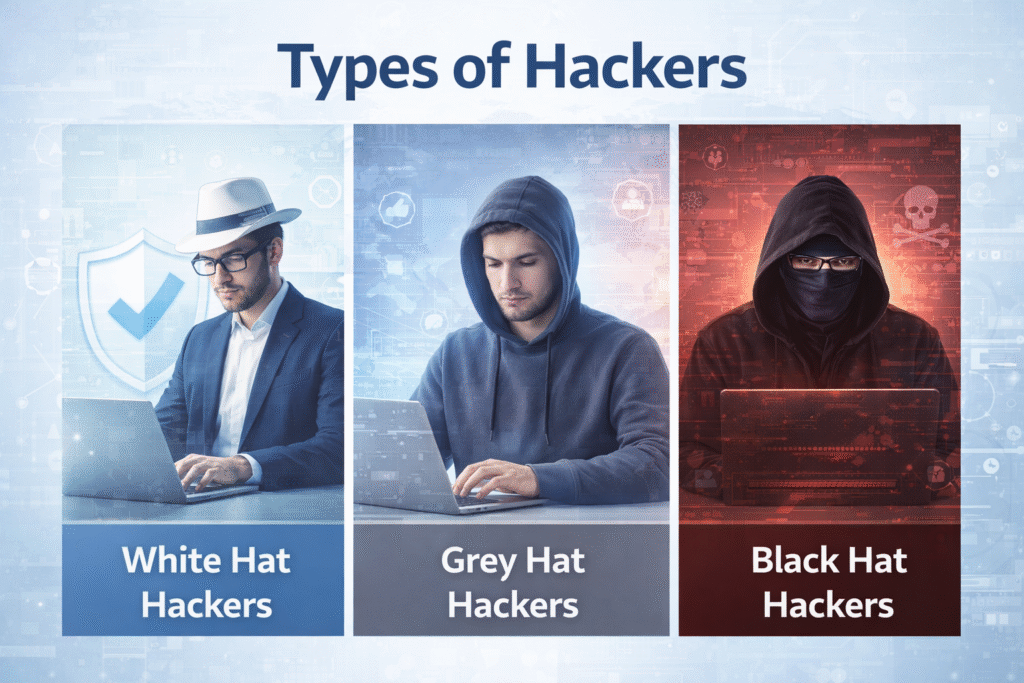
Understanding ethical hackers becomes easier when you compare them with other hacker types.
White Hat Hackers (Ethical Hackers)
These are professionals who:
Work for companies or governments
Perform penetration testing
Improve cybersecurity
Black Hat Hackers
These hackers:
Break into systems illegally
Steal data or money
Spread malware
Grey Hat Hackers
They operate between legal and illegal:
May hack without permission
But don’t always have malicious intent
🔍 What Does an Ethical Hacker Do?
Ethical hackers perform a variety of security-related tasks.
- Penetration Testing
They simulate cyberattacks to identify vulnerabilities.
- Vulnerability Assessment
They scan systems to find weak points in software or networks.
- Security Audits
They evaluate an organization’s overall security posture.
- Risk Analysis
They analyze how risky a vulnerability is and prioritize fixes.
- Reporting & Fixing Issues
They document findings and suggest improvements.
Key Skills Required for Ethical Hacking
To become an ethical hacker, you need a strong technical foundation.
1. Networking Knowledge
Understanding TCP/IP, DNS, firewalls, and protocols is essential.
2. Programming Skills
Languages like:
Python
JavaScript
C/C++
SQL
3. Cybersecurity Fundamentals
Knowledge of:
Encryption
Authentication
Security frameworks
4. Problem-Solving Skills
Ethical hacking requires thinking like a hacker.
5. Familiarity with Tools
You must know how to use security tools effectively.
Popular Ethical Hacking Tools
Ethical hackers use various tools to test systems.
Nmap
Used for network scanning and discovery.
Metasploit
A powerful tool for penetration testing.
Wireshark
Helps analyze network traffic.
Burp Suite
Used for testing web application security.
Kali Linux
A popular OS for ethical hackers.
Certifications for Ethical Hackers
Certifications help validate your skills.
CEH (Certified Ethical Hacker)
One of the most recognized certifications.
CISSP
Advanced certification for security professionals.
OSCP
Highly respected practical certification.
CompTIA Security+
Great for beginners.
Career Opportunities in Ethical Hacking
Ethical hacking is one of the fastest-growing careers.
Job Roles:
Ethical Hacker
Penetration Tester
Security Analyst
Cybersecurity Consultant
Salary Potential:
Beginner: $50,000 – $80,000
Experienced: $100,000+
Importance of Ethical Hacking
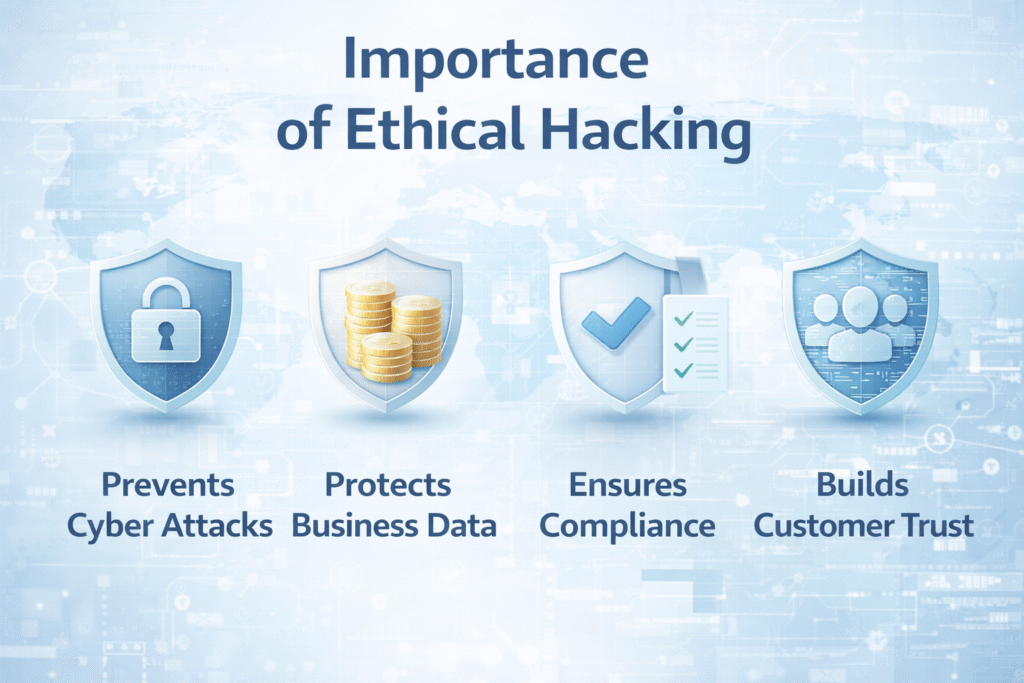
Ethical hacking plays a critical role in modern cybersecurity.
1. Prevents Cyber Attacks
Helps identify vulnerabilities before attackers.
2. Protects Business Data
Prevents financial and reputational loss.
3. Ensures Compliance
Helps organizations meet security standards.
4. Builds Customer Trust
Customers trust companies with strong security.
Legal and Ethical Responsibilities
Ethical hackers must follow strict rules.
Always get permission
Follow laws and regulations
Do not misuse data
Maintain confidentiality
How to Become an Ethical Hacker
Step 1: Learn Basics
Start with networking and operating systems.
Step 2: Learn Programming
Focus on Python and web technologies.
Step 3: Practice on Labs
Use platforms like:
TryHackMe
Hack The Box
Step 4: Get Certified
Earn certifications like CEH or Security+.
Step 5: Build Experience
Work on real-world projects.
Future of Ethical Hacking in 2026
The demand for ethical hackers is rapidly increasing.
Trends:
AI in cybersecurity
Cloud security
IoT security
Zero Trust architecture
Ethical hackers will be more important than ever.
Challenges in Ethical Hacking
Despite its benefits, ethical hacking has challenges.
Constantly evolving threats
High skill requirements
Legal risks if guidelines are not followed
Ethical Hacking vs Cybersecurity
Ethical hacking is a part of cybersecurity.
Ethical Hacking Cybersecurity
Focuses on testing systems Broad security field
Offensive approach Defensive + offensive
Conclusion
Ethical hacking is a powerful and essential field in today’s digital age. It helps protect organizations, prevent cyberattacks, and ensure data security.
With the rise of cyber threats, the demand for ethical hackers is only going to grow. Whether you’re a beginner or a professional, learning ethical hacking can open doors to a highly rewarding career.
Frequently Asked Questions (FAQs)
Is it possible for ethical hackers to earn millions?
Answer:
Yes, ethical hackers can absolutely become millionaires. Many professionals earn high incomes through full-time jobs, freelancing, bug bounty programs, and consulting. Platforms like bug bounty programs pay thousands of dollars for finding critical vulnerabilities. With experience, skills, and consistency, ethical hackers can build multiple income streams and reach millionaire status.
Can artificial intelligence replace ethical hackers in the future?
Answer:
No, AI will not replace ethical hackers but will enhance their work. AI tools can automate vulnerability scanning and threat detection, but human creativity, critical thinking, and decision-making are still essential. Ethical hackers will work alongside AI, making cybersecurity even stronger.
How challenging is a career in ethical hacking?
Answer:
Ethical hacking can be challenging because it requires technical knowledge, continuous learning, and problem-solving skills. However, with dedication and practice, it becomes easier over time. Beginners may find it difficult at first, but consistent learning can make it a highly rewarding career.
Who are some of the most famous and successful ethical hackers?
Answer:
Some well-known ethical hackers include Kevin Mitnick, who is now a cybersecurity consultant, and other experts who work with major organizations. Success in ethical hacking depends on skills, experience, and contributions to cybersecurity rather than just fame.
Is hacking illegal, and can hackers go to jail?
Answer:
Yes, illegal hacking can lead to serious legal consequences, including jail time. However, ethical hackers work with proper authorization and follow legal guidelines, so they do not face legal issues. Permission is the key difference between ethical and illegal hacking.
What is the average income of an ethical hacker?
Answer:
Ethical hackers earn competitive salaries depending on their experience and location. Beginners may earn around $50,000–$80,000 per year, while experienced professionals can earn over $100,000 annually. Freelancers and bug bounty hunters can earn even more.
What is the definition of an ethical hacker?
Answer:
An ethical hacker is a cybersecurity professional who legally tests systems, networks, and applications to identify vulnerabilities. Their goal is to improve security and protect organizations from cyber threats.
How much salary can ethical hackers expect in this field?
Answer:
The salary of an ethical hacker varies based on skills and experience. Entry-level professionals earn decent salaries, while experienced experts can earn six figures. Certifications and practical experience significantly increase earning potential.
What are the main responsibilities of an ethical hacker?
Answer:
Ethical hackers perform tasks like penetration testing, vulnerability assessment, security audits, and risk analysis. They identify weaknesses in systems and help organizations fix them before cybercriminals can exploit them.