
Artificial intelligence is no longer just a tech trend. In 2026, it has become a daily work tool for students, freelancers, business owners, marketers, developers, customer support teams, and office workers who want to save time and get better results. Instead of only replacing tasks, AI is increasingly being used to support people by handling repetitive work, analyzing data quickly, and helping teams make smarter decisions.
Many people still worry that AI only takes jobs, but the brighter side is that it also helps workers become more productive and focus on higher-value work. In simple words, AI is most useful when it works like a smart assistant that reduces busywork and gives people more time for planning, creativity, communication, and strategy.
What Is AI in Simple Words?
Artificial intelligence is technology that allows machines and software to perform tasks that usually need human thinking, such as understanding language, recognizing patterns, answering questions, making predictions, and helping with decisions. In 2026, this includes chat assistants, writing tools, image tools, recommendation engines, research helpers, coding assistants, and systems that automate repetitive office tasks.
For everyday workers, AI does not need to be understood as complicated science. The easiest way to think about it is this: AI helps you do your work faster, with less manual effort, and often with better insights than you could get alone.
Main points
| Point | Explanation |
|---|---|
| AI imitates some human thinking | It can process language, data, and patterns quickly |
| AI is now used in daily work | It supports writing, planning, research, customer service, and analysis |
| AI works best as a helper | It improves human work instead of only replacing it |
Why AI Matters More in 2026
AI matters more in 2026 because businesses and workers now use it in many practical ways, not just as an experiment. One current source says 94% of global businesses now use AI in at least one part of daily work, showing how deeply AI has entered modern operations, although that figure comes from a secondary report citation rather than a primary public dataset in the available result.
The reason AI has grown so fast is simple: it saves time, improves efficiency, and helps people solve problems faster. Companies use it to lower manual workload, employees use it to finish routine tasks more quickly, and professionals use it to make more informed decisions from data.

Why it matters
AI Automates Repetitive Tasks
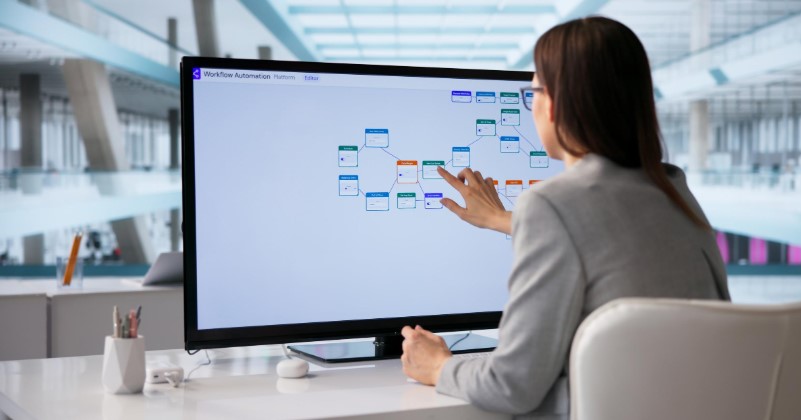
One of the biggest benefits of AI is automation. AI can handle repetitive tasks such as data entry, scheduling, summarizing documents, organizing emails, filling forms, and basic reporting, which reduces the amount of time people spend on low-value work.
This is important because routine tasks often consume a large part of the workday without creating much strategic value. When AI takes over repetitive steps, workers can spend more time on planning, communication, creativity, customer relationships, and decision-making.
Automation examples
AI Improves Decision-Making
AI helps people work smarter because it can analyze large amounts of data much faster than humans can on their own. This allows workers and business owners to make decisions based on patterns, trends, risks, and forecasts rather than guesswork alone.

For example, AI can help a retailer predict demand, help a finance team spot fraud patterns, help a manager see workflow bottlenecks, or help marketers understand which campaigns are performing best. This does not mean AI should make every decision alone, but it can provide strong evidence that helps humans choose more confidently.
Decision support
AI Helps You Write Faster

Writing is one of the most common work tasks improved by AI in 2026. AI tools can help draft emails, blog outlines, meeting summaries, reports, ad copy, social posts, and product descriptions, which is why they are widely used by creators, marketers, businesses, and freelancers.
The main benefit is not just speed, but momentum. AI can help people overcome blank-page problems, generate ideas, rewrite unclear sentences, and turn rough notes into a cleaner first draft so the human can focus on editing and quality.
Writing support
AI Speeds Up Research
AI is now a major support tool for research and learning. It can scan large amounts of information, summarize key ideas, identify patterns, and help people understand a topic more quickly than manual searching alone.
This is useful for students, analysts, marketers, writers, founders, and anyone who needs to learn fast. Instead of spending hours collecting basic information, people can use AI to organize the first layer of research and then spend more time checking facts, comparing sources, and making smarter judgments.
Research table
AI Improves Customer Service
AI is helping companies provide faster customer support in 2026. Chatbots, virtual agents, and AI-assisted support tools can answer simple questions, guide users to solutions, and help human agents handle cases faster by suggesting responses or filling in background details.
This improves both speed and availability. Customers get answers faster, and human support teams can focus on harder issues that need empathy, judgment, or problem-solving. Strong virtual agents are also one of the major trends mentioned in current AI coverage.
Customer service
AI Helps Small Businesses Compete

AI is not only for big tech companies. Small businesses can now use AI for content creation, email drafting, customer support, scheduling, forecasting, marketing analysis, and automation, which gives them access to capabilities that once required larger teams and budgets.
This is one of the brightest sides of AI in 2026. A solo business owner or small team can use AI to work like a larger operation by saving time, improving consistency, and scaling output without hiring too quickly.
Small business
AI Supports Creativity, Not Just Efficiency
Many people think AI only handles routine work, but it also supports creativity. AI-assisted content creation is making the creative economy more accessible, and tools can now help with brainstorming, outlines, design ideas, writing drafts, naming concepts, and experimenting with different formats.
This does not mean AI replaces human originality. The best results usually come when AI helps generate options and humans choose, refine, and shape the final output with taste, strategy, and emotional understanding.
Creativity
AI Helps Teams Work Better Together
AI can improve teamwork by organizing information, summarizing meetings, tracking tasks, and helping everyone stay aligned. In many workplaces, confusion comes from poor communication, scattered notes, and delayed follow-up rather than lack of talent.
AI tools help reduce that friction. For example, AI can turn a long meeting into clear action points, summarize project updates, or help team members quickly find key information across documents and messages.
Teamwork
AI in Different Industries
AI is not helping only office workers. Current sources show benefits across healthcare, finance, agriculture, cybersecurity, transportation, scientific discovery, education, and business operations.
This broad usefulness explains why AI keeps growing. It adapts to different industries by solving different problems, from fraud detection in finance to medical support in healthcare and predictive planning in operations.
Industry
The Human Role Still Matters
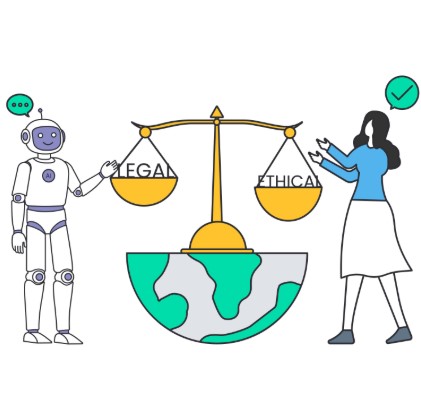
Even with all these benefits, AI works best when humans stay in control. Current commentary emphasizes that the best results come from “human with machine,” not “human versus machine,” because AI is strongest at speed and pattern recognition while humans are stronger in judgment, ethics, empathy, context, and strategy.
This balance matters more in 2026 because some experts warn that AI can also intensify work if companies use it only to push more output instead of improving job design. So the bright side of AI depends not just on the tool, but on how wisely people use it.
Human plus AI
| AI Strength | Human Strength |
|---|---|
| Speed | Judgment |
| Pattern detection | Context understanding |
| Automation | Creativity and taste |
| Data processing | Ethics and empathy |
| Repetition handling | Strategic thinking |
Challenges to Use AI Smartly
AI has clear benefits, but it also needs careful use. Ethical concerns, over-reliance, privacy questions, bias risks, and quality control are part of the 2026 AI conversation, which means users should treat AI as support, not blind authority.
The smartest approach is practical. Use AI to save time and improve work, but always review important outputs, protect sensitive information, and keep human oversight on high-stakes tasks.
Smart-use
How to Start Using AI at Work
The easiest way to start is not to automate everything at once. Instead, identify the tasks that take too much time, repeat often, or create mental fatigue, and test AI in those areas first.
A good beginner plan is simple: use AI for drafting, summarizing, brainstorming, scheduling, customer FAQs, and research support. Once you see real time savings, you can expand into analytics, workflow automation, or business-specific use cases.
Beginner action
FAQs
What is the bright side of AI in 2026?
The bright side of AI is that it helps people work smarter by saving time, automating routine tasks, improving decisions, and supporting creativity and productivity.
How does AI help at work?
AI helps at work by handling repetitive tasks, supporting writing and research, improving customer service, and helping teams make faster data-based decisions.
Is AI replacing all jobs in 2026?
No, current coverage shows both concern and opportunity, with AI often shifting work toward more creative, analytical, and strategic roles instead of simply removing all jobs.
Can small businesses benefit from AI?
Yes, small businesses can use AI for content, customer support, planning, automation, and productivity without needing a large team.
What are the main benefits of AI?
The main benefits include automation, efficiency, faster research, stronger support tools, better decisions, and broader access to powerful digital capabilities.
Should humans still check AI output?
Yes, humans should review AI output because accuracy, ethics, privacy, and context still matter.
Final Thoughts
The bright side of AI in 2026 is not just that machines can do more work. It is that people can use AI to reduce repetitive effort, improve quality, learn faster, and focus more on the work humans do best. When used wisely, artificial intelligence becomes less of a threat and more of a practical partner for working smarter in modern life.