
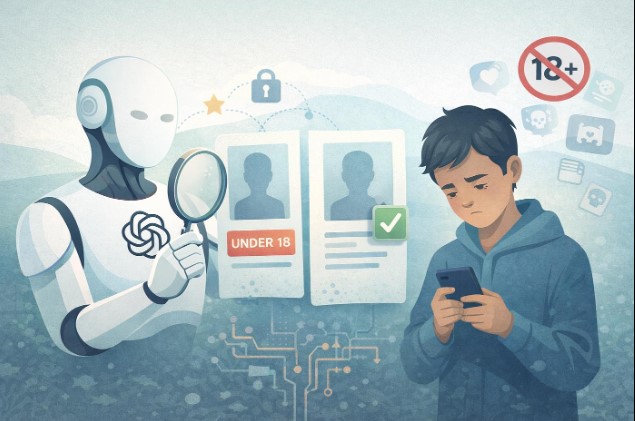
Meta Enlists AI to Enforce Age Restrictions: What It Means for Social Media Safety
Meta is making a major move by using artificial intelligence to enforce age restrictions across its platforms. This update could change how Facebook and Instagram protect younger users, reduce fake age sign-ups, and improve online safety for teens.
What Meta Is Doing

Meta has announced that it is using AI to help identify users who may be underage and to apply stronger age-based restrictions. The goal is to make sure teens and children are placed into safer account settings automatically. This approach is part of Meta’s broader push to improve online safety and make age verification more effective.
Why Age Restrictions Matter

Age restrictions are important because many social media platforms rely on users entering their own birth date. That system is easy to misuse, which means children can sometimes access content or features that are not meant for them. Meta’s AI-based system is designed to reduce that problem by checking more than just the birthday a user types in.
How Meta’s AI Age Detection Works
Meta’s AI can look at different signals to estimate a user’s age. These signals may include profile information, account behavior, photos, videos, captions, and other activity patterns. If the system believes an account belongs to a teen, it can move that account into stricter teen safety settings.
Why This Update Is Important for Parents
For parents, this update could bring more peace of mind. Instead of relying only on children to enter the correct age, Meta is taking a more active role in identifying younger users. This may help limit exposure to harmful content, unwanted messages, and risky interactions.
What This Means for Teens

Teens may notice more protective settings on their accounts. These settings can limit who can contact them, what content they see, and how their profiles are used. While this may feel restrictive to some users, the main purpose is to create a safer social media experience.
Privacy and Accuracy Concerns

Although AI can improve age checks, it is not perfect. Some users may be wrongly flagged if the system makes an incorrect guess about their age. There are also privacy concerns about how much personal content social platforms should analyze to enforce these restrictions.
Meta’s Role in Social Media Safety
Meta’s decision reflects a larger trend in the tech industry. Social platforms are under growing pressure to do more to protect minors online. By using AI for age enforcement, Meta is showing that safety features are becoming more automated and more advanced.
| Feature | Old Age Check System | Meta’s AI Age Enforcement |
|---|---|---|
| Age verification | User enters birthday manually | AI estimates age from multiple signals |
| Safety protection | Limited unless users report issues | Automatic teen-focused restrictions |
| Risk of false age claims | High | Lower, but not eliminated |
| Privacy impact | Lower content scanning | More content analysis may be involved |
| Child safety | Basic protection | Stronger and more proactive protection |
FAQs
1. What is Meta using AI for?
Meta is using AI to estimate user age and apply stronger safety settings to underage or potentially underage accounts.
2. Why is Meta enforcing age restrictions with AI?
The company wants to reduce fake age entries and improve child safety across its platforms.
3. Does this mean all teens will be restricted?
No, but teens may automatically receive stricter account settings designed to protect them online.
4. Can Meta’s AI make mistakes?
Yes. Like any AI system, it can misidentify users and may sometimes apply restrictions incorrectly.
5. Is this update only for Facebook and Instagram?
It is mainly focused on Meta’s platforms, especially Facebook and Instagram, where age-based safety settings are especially important.
Meta’s AI-powered age enforcement is a big step toward safer social media experiences for younger users. It may not solve every safety problem, but it clearly shows that platforms are moving toward stronger, more automated protection systems.